In an attempt to maintain order on this blog, and to not have so many posts I've created a secondary one, the link of which is HERE and also directly to the right is a link to it as well. There will be pictures, the assignments, and also special games and flashcards with the translations.
I wanted to do something different from the other students, and it took me until yesterday to discover this program to help me create the games and flashcards. I even tried making flash programs, which took a lot of time to end up with nothing usable. Anyway, follow the link to see the projects that I've done.
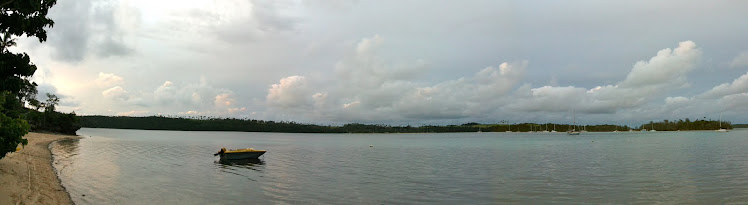
This is the guesthouse that I went for the grand opening of in Vava'u. The guesthouse is owned by my Tongan friend's family, and it is absolutely beautiful.
I've revamped a sheet that Uini handed out in the fall with the tenses and pronouns. It is a PDF that can be found by clicking here. If there are any corrections that need to be made, just comment below, the changes will be made and I'll reload the spreadsheet to google docs. I hope this is a great help to those that pronouns/tenses are confusing to.
*updated*
You can now find postposed pronoun help on this sheet as well as some time markers. More will be added so keep checking back.
On February 26th, 2003 at the age of fifteen, my oldest brother intentionally died from a drug overdose. I was the first one home and discovered his body, hunched over, his face buried into his pillow, body curled into the fetal position. Ben, I felt, was the only person that made me feel connected to my family and he was gone. At that young age I knew nothing of other culture’s mourning practices or what was deemed acceptable, all I knew was how I was told to mourn by my parents.
Ben was the black sheep of the family. He was raised with very damaging influences from our extended family, and by the hands of parents who weren’t able to cope with a child who desperately needed their help. Early in his life he left the small town we were raised in, and I was taught that I shouldn’t try to connect with him at all because he was dangerous and would “ruin me”. He moved back home to go back to school when he was 25 and I was 13. Ben stopped using drugs and had apologized for leaving me and promised to be the best big brother he could be. During the two years we had together we stayed up late watching foreign films together, or he would lend me a cd, we grew fairly close.
Towards the end of his life I felt a change in his personality. One morning I went downstairs and noticed the remnants of cocaine on one of his books. Wanting to protect him I didn’t tell anyone. Just washed the remainder off and put it on a bookshelf. Two weeks later I was ironing a dress shirt to wear to his funeral.
I remember distinctly as my parents were driving to the mortuary that my mom told me to smile so we didn’t let people think we were too sad, or weren’t handling the death of a loved one well.
Smiling I shook the hands of neighbors and family friends, assured them I was doing well enough, and quickly turned the focus onto other things that would be important to a 15 year old, and even attempted joking a few times.
The reason why I am writing this is to compare the palangi experience of mourning and funerals to the funerals of the pacific islanders. Not having attended a funeral but hearing great detail through class and personal discussions. My experience in mourning was that emotion is strictly private and the feeling of emotions is not encouraged. Death is sanitized and distant. Whereas the Tongan mourning process is very open, death isn’t kept away. People cut their hair, wear black for an extended time. Crying is expected or even promoted.
Polynesian mourning is a very communal experience, the death of one is felt throughout the group. The emotion and loss is projected outwardly...something I wish I could have experienced. There are many traditions or protocols that the Tongan community that work much better than than their palangi counterparts, and the mourning process is one of those things.
Mourning my oldest brother took years, it took reconciliations of faith, the treatment of those who are different, it took reconnecting with his friends, reading the books he left behind and some other very personal moments. I can’t help but think that if I knew there was a better way to mourn how much faster I could have processed the emotions of his death. Thankfully I’m learning of a culture where some things are done more naturally.
I’ve included the song that he asked a friend to sing at his funeral, and two pictures. One a few years before his death and one of him and our newborn niece, Gracie.
Thursday, February 3, 2011
Uini,
I also have a journal entry about my perceived notions of emotion and mourning comparing my experience in grieving with the stories of funerals. It should be posted by Friday because I want to edit it a few more times.
In the tongan language there is a speaker and a listener. Conversations are framed to be either inclusive of the listener/speaker, or exclusive of the listener/speaker. The choice of pronouns shows whether or not the listener is included in the conversation. The choice of pronouns also shows if you are talking about 1, 2, or 3 + people.
For example mau is the pronoun that you would choose if you are talking about 3+ people but not the people you are speaking to.
In the language there are preposed and postposed pronouns. You can drop the the postponed because it is not widely used in speech. Preposed cannot be dropped or substituted for the postponed pronoun.
This may seem repetitive, but in the contexts of the language it is not. In conversation, when using both it emphasizes the verb, not the pronouns. Postponed pronouns in modern conversation usually drop the the ki in front of the ki(tau,mau,mou,nau)tolu To make tautolu.
Mofisi--the beginning of the turning of the tide as it comes in.
Ufiafua--when the rocks at the edge of the reef disappear
Liku-- the area of the ocean between the beach
Funohaki-- when the incoming tide covers half of the sand on the beach
Hu’a--The incoming tide when it gets deep.
Tau--tide is full and is at its highest
Taumatala-- When the tide turns and it begins to recede from the beach.
matuku--the tide is going out, and the sand is left further up the beach dry
Fonohifo--The tide has gone out more than halfway on the sandy beach
Tu’ungakiu--The big boulders at the edge of the reef are exposed, and the birds can stop and rest on them
Mamaha--The tide is at its lowest leaving everything high and dry.
Taumalie--A flood--the tide goes to the highest point on the beach that it can reach.
Taul_o_fu’u--The tide is all the way to the low crawling weeds near the beach, and the waves rush in one after the next, as if they’re piled up one after another.
mamaha fu’u--extraordinarily low tide
mamaha pakupaku-- The tide is all the way out, and when the edge of the reef is left high and dry.
A’afa or Hohoko--the tide just left and it comes back in. high tide is followed once again by another high tide
Fakalolo--the outgoing tide is low enough that the incoming tide comes in right away. (similar to a’afa or hohoko)
Fakafuli--the sea is rough with lots of waves and a strong current
Uike Lotu-- New Years. This is a week long celebration where there are a lot of feasts and church services
Falaite lelei-- Good Friday
Faka me-- Reenactments of the crucifixion.
Sune Ko Hono Fa-- Independence day, this is the day that Tonga was no longer a British protectorate
Suilai Ko Hono Fa--Tu'i Siaosi Tupou IV's birthday, also this is the day for Miss Heilala
'Aho Kalisimasi--Christmas day, December 25th
Tupakapakanava--this is a traditional ceremony that is performed at night and is held during times of Royal celebration such as a birthday or coronation of a monarch.
Notice the children sitting near the trilithon, you can see how large it is compared to them
The Ha'amonga 'a Maui was built in the 13th century by Tui Tonga Tu'itatui and weighs several tons. There are several legends around the creation of the trilithon such as being a doorway to a former palace, or one presented by the last king to be a way of marking the solstices.
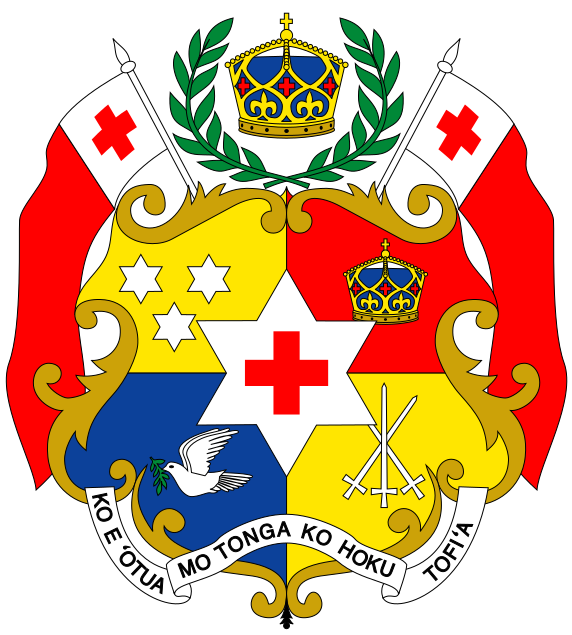
Ko e Sila 'o Tonga
Created in 1875 by Tu'i Siaosi Tupou I
When King Siaosi Tupou I unified the kingdom and produced the first constitution in the year 1875, he also introduced the coat of arms and the beauty behind the meaning of each aspect of the seal.
The crown at the top is surrounded by lou ifi, symbolizing that the people are subject to the king. Below the crown we see the three stars representing the three island groups, Vava'u, Ha'apai, and Tongatapu. The dove and olive branch representing God's desire for Tonga to be a peaceful kingdom. To the right of the dove we see the three swords, symbolizing the three dynasties. The scroll at the bottom reads, "Ko e 'Otua Mo Tonga Ko Hoku Tofi'a" the phrase beautifully translates as "God and Tonga are my inheritance.
One problem that I’ve been having is I’ve been far too analytical in trying to learn the language. I’ve been going into class as with an English speaker mentality. Having lessons focusing on explaining aspects of English grammar and then attempt to transition into Tongan grammar have me exploring mental tangents concerning the English language only. The lessons are necessary and I am not saying they shouldn’t have been taught: Our class needed them, what I personally need to do is go into this learning environment with an attitude of a child.
Although, being like a child sounds like a spiritual analogy, it goes much deeper than having a teachable demeanor. So far, in this class, I’ve been trying to tackle the Tongan language by translating what I’ve been learning to how it is in the English language, and obviously I haven’t been able to learn as much as I could have because of that mindset.
The best analogy of the brain and language is that the brain is like the hardware of a computer--the computer alone (meaning no programs or operating system) is useless. Language is like an operating system. It allows the brain to function, communicate and formulate ideas.
My goal going forward is learning how the Tongan mind works and operates so I can become not only a Tongan speaker, but a Tongan thinker. I need to find a way to partition my mind to have a place for Tongan thinking to be done, not just charging at the Tongan language like an analytical English speaker.
Another obstacle I need to overcome is my aversion to anything religious. Although I haven’t explicitly mentioned this in class, I do not affiliate myself with any spiritual tradition formally. Christianity is life for Tongans, and not just spiritual life, and I do not share that feeling with them in the least bit. Not that I don’t respect and find that honorable, because I do, but I do not share those same thoughts and feelings.
Looking back on our semester together as a class I wish I would have focused more on figuring out how the Tongan mind works and spending time on conversational skills, but I am looking forward to next semester and hope that my Tongan will get exponentially better.
The links below takes you to Google Documents, the page will load and you can view the slides without playing them, or you can click the download button and view the slideshow in Power Point which will show the animations.
This was an essay written for my intro to college writing course.
beach on south side of Tapana
The rusted machete fell with a crack I could hear over the engine and the sound of the waves crashing against the crowded boat. The blade raised again in the air and fell with another crack as the rust became wet. The third time the knife fell it successfully dislodged the top of the coconut. With a genuine smile Pita, the hired hand of my travel companion’s family, handed me the seed overflowing with milk.
I took a sip, smiled, raised the coconut and said, “Malo.” Pita continued to crack the tops off the coconuts for the rest of the family. Our boat rocked back and forth while I sipped on the sweet milk, I looked out over the ocean to see islands dotting the horizon. It had been just over a week since I had arrived in Vava’u, the northern most island group in the Kingdom of Tonga, and now I was going to be camping for two days on the island of Tapana.
Three years prior to this moment I departed from the religious magical thinking I was raised around. The pivotal decision to leave the religion of my family caused me to leave all that I knew in search for greater personal truth. My search for a spiritual authenticity that fit with who I was had led to me lightly practice mindfulness and meditation. My journey also led me to many new people and experiences, like my friend Michael whom I was traveling with.
I finished the coconut milk and began to relax. The sound of the engine, the conversations, and rocking of the boat began to fall into the background and I was able to appreciate my surroundings. Soon enough we had come around the north corner of a small island. Pita jumped off the boat to secure it, and our camping gear along with two sea kayaks were unloaded.
As soon as our things were on the beach, we said our goodbyes and our family was headed back to Neiafu, the main island in the Vava’u group. We were alone with the ocean and the beach, the sounds of the water, and I felt like I was at home.
Being a Utah native, landlocked for much of my life, being near an ocean is breathtaking experience, and I wasted no time to get in the ocean after our tents were set up. Every ten or fifteen feet there was another mound of coral, each a miniature eco system under the water. There were plants moving back and forth with the tide, fish of every possible color surrounded me, and poisonous vana with small fish darting between its sharp spines. After hours of swimming the water began to cool and I knew the sun was setting.
The sky was turning a deep orange, sunburned and exhausted I sat on the beach. In an attempt to meditate I recognized my breath, and began to look out over the ocean. The sound of the waves brought me back to my breath as the splendor of the scene became overwhelming. My natural instinct was to try to cling to the beauty, to make it last, to keep it as long as I could. However, I went against my human conditioning, I let my self feel the impermanence of the scenery and let it go. Only then did I fully experience beauty for the first time in my life.
The majority of my life was spent in Utah Valley where there is hardly anything open on Sunday, so I assumed I would be prepared for the entire country shutting down. I wasn’t, I didn’t have an easy time adjusting to not being able to buy a drink, or go to a restaurant on Sundays.
I arrived in Tonga in the middle of the week, and was in Vava’u by Friday. Suddenly it was Saturday night around 11 pm it was announced we needed to go to the “Chinese store.” While walking there it was explained to me that the only thing that is allowed to be open on a Sunday are the bakeries. We bought enough food to feed the all of the family, and carried it back to where we were staying. The tourist shops had recently gotten into trouble for operating, and the police cracked down on businesses violating the law.
Sunday seemed to come early, 5 am early. Instead of the roosters that had awoken me previous mornings, it was the choirs singing beautifully and loudly that had caused me to wake up. The congregations filled the island with graceful and touching praises.
The few Sundays I was able to spend in Tonga were relaxing, albeit were probably considered extremely sacrilegious by those observing us. In order to buy things, we had to pay off an owner of a store to break the Sabbath laws. We went to beaches and swam at the wharf (with those of the opposite sex no less.) I made sure as not to laugh too loudly, and to try to be more reverent when I was walking about and saw a congregation being let out of their services.
The last Sunday I was in Vava’u, I planned on attending the Weslayan church with the family I was staying with. I had a shirt picked out, and a tupenu ready to be worn, that is until I became violently ill. Being as sick as I was, I had to stay home while other members of the family went to the services. Looking back I wonder what I did to deserve not being able to attend church services--was it the swimming on a Sunday, or buying beer on a Sunday?
It wasn’t until last Sunday that I was able to attend a Tongan church service. I chose to go to the Tongan United Methodist Church. While I was driving there I became lost, rendering me 30 minutes late, but thanks to everything running on Tongan Time, I was actually 40 minutes early.
Being the only palangi on the church property, I attracted a lot of stares and pointing fingers. I waved hello to a group of women and gave a standard greeting. They laughed and yelled “The palangi knows tongan!” Continuing into the chapel I sat in the back. The children playing in the front stopped immediately and pointed at me exclaiming “Who’s the white skinny guy?!” I laughed, gave the peace sign and stayed in the back. The service was filled with beautiful music, and an impassioned sermon. Definitely something that I will look forward to attending again.
Immediately upon landing at the Fua’amotu International Airport early in the morning on June 8th 2010, there was an energy on the island that I wasn’t expecting. A 20 minute ride landed us in the village (wherever Jaqueline lives) a mere five minutes away from Nuku’alofa’s city center. Breakfast was served seconds after arriving, massive amounts of bacon, and an intimidating pile of toast awaited us in the kitchen. Pleasantries were exchanged, and the family caught up while I was fed.
Shortly after we finished breakfast, conversation headed towards the palpable energy I felt on the island when we landed. There was going to a rally today in downtown Nuku’alofa. All the high school students were let out of school to march through the streets in to show support for having more commoner seats in government. Currently, there are only 9 seats in parliament elected by the people, the rest are appointed by the King.
One of the aunts volunteered to drive us to the city. With the Royal Pacific Hotel as a backdrop, students from Liahona, Tonga High School and other secondary schools walked down the streets. Marching bands played music as people cheered. It felt like a parade for the students, and in a way it was a parade for the students. In a country that is increasingly influenced by western culture, it seemed to me that the youth have a desire to be more equally represented.
Weaving through the streets and ally ways, I had a distinct feeling that I was witnessing history in the making. Children singing, smiling, and waiving. The energy I was feeling seemed to me to be filled with optimism, and possibility. This was balanced by a reverence to the monarch. There were no signs sharing political messages, but the knowledge that this was happening because the people desired to have more fair political representation.
The beauty of seeing the hotel being rebuilt with the rising generation parading in hope that they’ll have a government that the people will have more representation in gave me hope that in this small corner of the world their lives are ever improving, and will have brighter futures than previously thought.